Therapeutic tape for pain relief, swelling control, sports performance and injury rehabilitation, from a physiotherapist with Pro Kabaddi League taping experience.
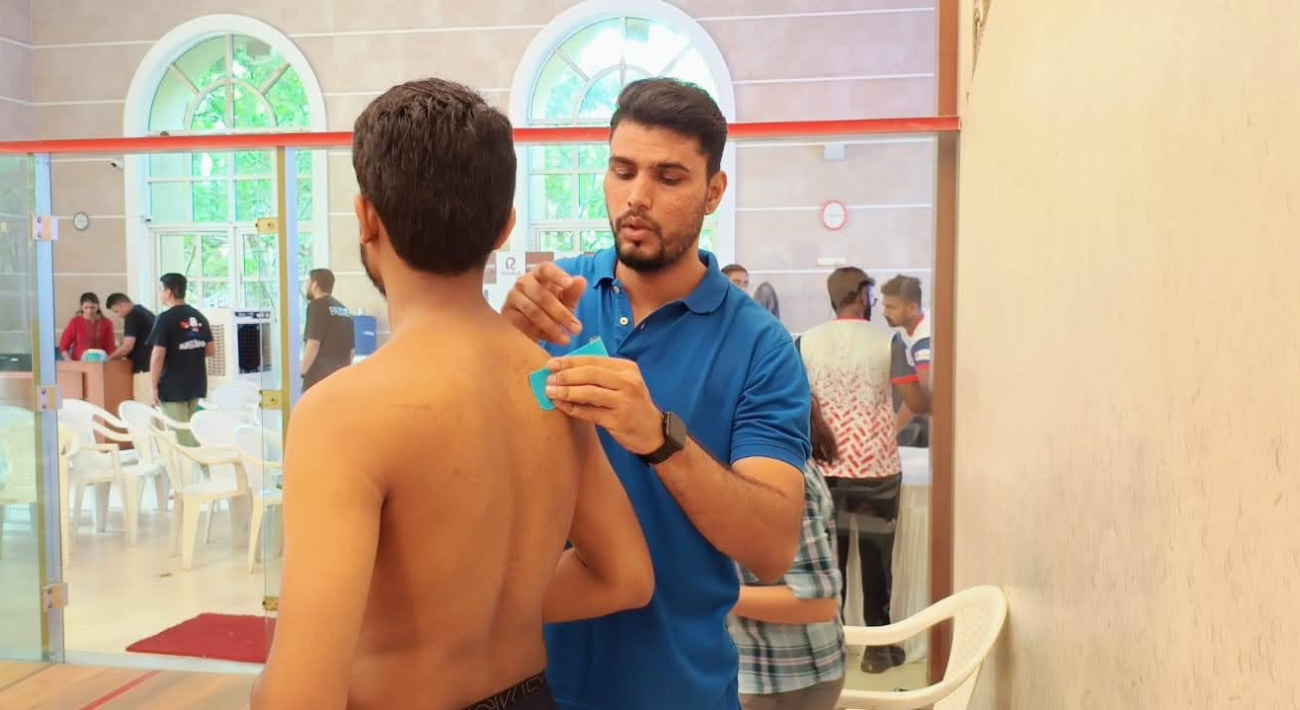
Elastic therapeutic tape is applied over muscles, joints and soft tissues to reduce pain, control swelling, improve circulation and support natural movement, without restricting range of motion.
Kinesio tape mimics the natural elasticity of skin. Applied correctly, it gently lifts the skin away from the underlying tissue, which can improve lymphatic drainage, reduce inflammation and change the pain signals sent to the brain. Dr. Parmar always uses it alongside manual therapy and targeted exercise.
“Tape applied with precision and purpose does far more than support a joint — it changes how the nervous system responds to movement.”
Dr. Niraj Parmar
Surrounds the target muscle with two tails, to activate an underactive muscle or calm an overactive one.
A single strip applied directly over the pain source, for acute injuries, targeted pain relief and postural correction.
For muscles whose origin and insertion change significantly during movement, such as the rhomboids or peroneals.
Thin tails applied over a swollen area to encourage lymphatic drainage. Used for post-surgical oedema, haematoma and lymphoedema.
Overlapping strips with a central hole over a focal area of swelling, used for bursitis and localised joint swelling.
Non-elastic tape for maximum joint restriction, such as acute ankle or wrist sprains, or return to sport when protection matters more than range of motion.
Your movement patterns, posture, muscle imbalances and condition are checked before any tape is chosen.
Dr. Parmar chooses the tape type (kinesio or rigid), cut shape and tension to match a clinical goal.
Skin is prepared, the joint or muscle is positioned, and tape goes on at the right tension and direction.
Dr. Parmar tests the tape through movement to confirm the effect, your comfort and your range of motion.
Taping goes with manual therapy, exercise and rehabilitation. It is never used on its own.
You leave knowing how long to wear it, how to care for it, how to remove it and which signs to watch for.
The application of elastic or rigid therapeutic tape over muscles, joints and soft tissues for a specific goal: pain reduction, swelling control, joint support, postural correction or muscle activation. Kinesio tape is elastic and allows full range of motion. Rigid tape is used when maximum joint restriction is required. Tape is always chosen after a full clinical assessment.
It gently lifts the skin away from the underlying tissue during movement. This decompresses sensory receptors, changes the signals sent to the brain, reduces pain perception and improves blood and lymphatic flow. The tape's elastic recoil also gives continuous feedback that improves body awareness during rehabilitation.
It is water-resistant and typically stays effective for 3–5 days, even through showering and moderate activity. You'll get care instructions at your session, including how to remove it gently: apply oil or lotion and peel slowly in the direction of hair growth to avoid skin irritation.
No. Office workers with neck and back pain, seniors with joint instability, post-surgical patients managing swelling, and people with lymphoedema or postural problems can all benefit.
Kinesio tape stretches to about 130–140% of its length, matching the skin's natural elasticity. It supports without restricting movement. Rigid sports tape (white zinc oxide tape) doesn't stretch and is used when maximum joint restriction is needed, such as for acute ankle sprains or joint protection in contact sport. The two are often used together.
Start with professional application, so the cut, tension and direction suit your condition. Dr. Parmar can then teach you to self-apply, particularly on common areas such as the lower back, knee or shoulder. Incorrect application can reduce the effect or irritate the skin, so get guidance first.
No. At Dr. Parmar's clinic, taping is always part of a physiotherapy plan. It reinforces manual therapy, targeted exercise and postural correction, and keeps working for 3–5 days between sessions.
★★★★★
“He is an extremely good sports physiotherapist. When I went to him post shoulder surgery I couldn’t move my arm at all — in nearly 2 months I was swimming and doing weights at the gym again. Thank you Dr. Niraj!”
★★★★★
“Amazing therapist. Has a deep knowledge of his field and treats with utmost care and love. Very good hands.”