
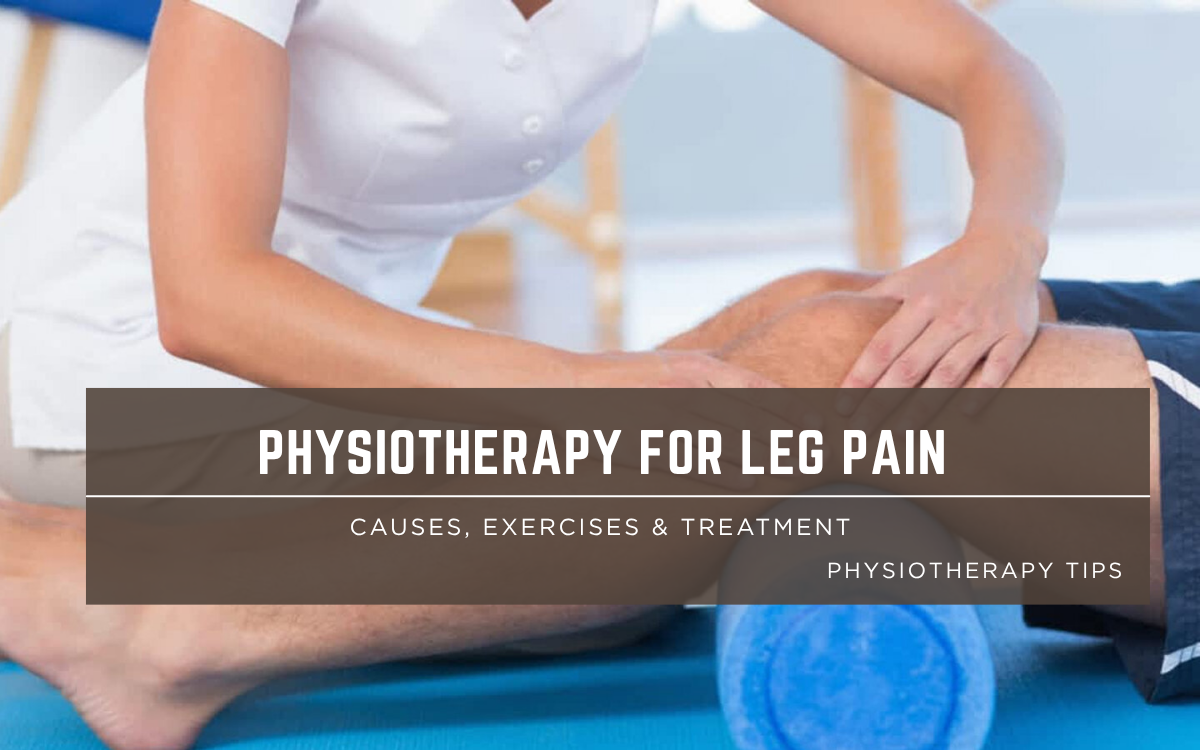
Physiotherapy for Leg Pain
Introduction: Why Your Leg Pain Won’t Go Away
Leg pain is frustrating. It limits your ability to walk, climb stairs, exercise, work, and even sleep.
You might assume it is simply a “muscle pull” that rest will fix. But when weeks pass and the pain remains—or worsens—it is time to dig deeper.
Leg pain rarely originates in isolation. Often, the true source is your lower back (sciatica), your hip, your knee, or even your blood vessels.
This is where physiotherapy for leg pain becomes invaluable. A skilled physiotherapist does not just treat the symptom—they find the root cause and fix it.
In this comprehensive guide, we will explore:
- Common causes of leg pain
- How physiotherapy diagnoses the real source
- Specific exercises and treatments
- When to seek immediate care
Common Causes of Leg Pain
Leg pain can arise from many structures: muscles, bones, joints, nerves, or blood vessels.
1. Muscle-Related Leg Pain
Strains: Overstretching or tearing of muscle fibers. Common in calves, hamstrings, and quads.
Contusions: Deep bruising from direct impact.
Compartment syndrome: Increased pressure within muscle compartments (acute or chronic).
2. Bone and Joint Causes
Arthritis: Osteoarthritis of the hip, knee, or ankle refers pain into the leg.
Stress fractures: Hairline cracks in the tibia or foot bones (common in runners).
Shin splints: Medial tibial stress syndrome—pain along the shin bone.
3. Nerve-Related Leg Pain (Most Common)
Sciatica: Compression of the sciatic nerve in the lower back causes radiating pain, numbness, or tingling down the back of the leg.
Lumbar radiculopathy: Pinched nerve roots in the spine (L4, L5, S1) refer pain to specific leg regions.
Peripheral neuropathy: Diabetes or other conditions cause burning, shooting leg pain.
4. Vascular Leg Pain
Peripheral artery disease (PAD): Reduced blood flow causes cramping leg pain during walking (claudication).
Deep vein thrombosis (DVT): Blood clot causes swelling, warmth, and pain—this is a medical emergency.
How Physiotherapy Diagnoses the True Source
A physiotherapist uses a systematic approach to identify the exact cause of your leg pain.
Step 1: Subjective Interview
- When did pain start?
- What makes it better or worse?
- Is it sharp, dull, burning, or aching?
- Does it travel (radiate) anywhere?
- Any numbness, tingling, or weakness?
Step 2: Physical Examination
- Observation: Swelling, muscle wasting, gait abnormalities
- Palpation: Tenderness along muscles, joints, or nerves
- Range of motion: Hip, knee, ankle restrictions
- Muscle strength testing: Identifying weakness patterns
- Neurological testing: Reflexes, sensation, nerve tension (slump test, straight leg raise)
- Special tests: Straight leg raise for sciatica, McMurray’s test for meniscus
Step 3: Referral When Needed
If red flags appear (sudden swelling, fever, trauma, loss of bladder control), the physiotherapist will refer immediately for imaging or emergency care.
The 5 Most Common Leg Pain Patterns (and Their Real Source)
| Pain Location | Feels Like | Likely Source |
|---|---|---|
| Back of thigh/calf | Burning, shooting, pins-and-needles | Sciatica from lumbar spine |
| Front of thigh | Dull ache, worse with walking | Lumbar nerve root compression (L2-L4) |
| Lateral (outer) thigh | Burning, numb, sensitive to touch | Meralgia paresthetica (lateral femoral cutaneous nerve) |
| Shin area | Dull, throbbing, tender to touch | Shin splints or stress fracture |
| Whole leg cramping | Muscle tightness, worse with exercise | Peripheral artery disease or electrolyte imbalance |
Effective Physiotherapy Treatments for Leg Pain
Once the source is identified, your physiotherapist will design a personalized plan using multiple evidence-based techniques.
1. Manual Therapy
Manual therapy is hands-on treatment to reduce pain and restore movement.
- Soft tissue mobilization: Releases tight muscles (gastrocnemius, hamstrings, quads)
- Joint mobilizations: Improves hip, knee, or ankle mobility
- Neural mobilization: Glides trapped nerves (sciatic nerve flossing)
- Myofascial release: Reduces fascial restrictions
2. Therapeutic Exercise (Specific Examples)
For Sciatica (Nerve Pain from Back):
- Slump nerve glides: Sit, slump shoulders, extend one leg, and nod chin to chest.
- McKenzie extension in lying: Lie face down, prop on elbows to centralize pain.
- Bird-dog: Strengthens core stabilizers.
For Shin Splints:
- Calf raises on step: Eccentric loading of the tibialis posterior.
- Towel scrunches: Strengthens foot intrinsics.
- Single-leg balance: Improves tibial control.
For Arthritis Leg Pain:
- Straight leg raises: Quadriceps strengthening without joint compression.
- Stationary cycling: Low-impact range of motion.
- Step-ups: Functional strengthening.
For Hamstring Strain:
- *Isometric holds at 90/90:* Pain-free activation.
- Eccentric single-leg Romanian deadlifts: Lengthens under load.
- Supine active straight leg raise: Neural tension assessment.
3. Modalities for Pain Relief
- Cryotherapy (ice): For acute inflammation post-exercise
- Thermotherapy (heat): For chronic muscle tightness
- Therapeutic ultrasound: Deep tissue heating
- TENS: Pain gate control
- Laser therapy: Cellular healing
4. Taping and Bracing
Taping physiotherapy provides support without restricting movement.
- Kinesiology taping: Reduces pain, facilitates muscle function
- McConnell taping: Patellar alignment for knee pain
- Heel wedges: Leg length discrepancy correction
5. Dry Needling
Dry needling physiotherapy targets myofascial trigger points in tight leg muscles.
- Effective for calf tightness, hamstring trigger points, and quadriceps knots
- Reduces referred pain patterns
- Typically combined with stretching for best results
6. Gait Re-training
Abnormal walking patterns cause and perpetuate leg pain.
- Video gait analysis identifies deviations
- Corrective cueing (pelvic drop, excessive pronation)
- Footwear recommendations or orthotics
Specific Physiotherapy Exercises for Leg Pain by Source
Exercise Set 1: If Pain Comes From Your Back (Sciatica)
| Exercise | Reps/Duration | Purpose |
|---|---|---|
| Prone press-ups | 10 reps, hold 2 sec | Centralize leg pain |
| Slump nerve glides | 10 reps, 3x/day | Mobilize sciatic nerve |
| Pelvic tilts | 15 reps | Reduce lumbar lordosis |
| Clamshells | 15 each side | Stabilize gluteus medius |
Exercise Set 2: If Pain Is in Your Calf or Shin
| Exercise | Reps/Duration | Purpose |
|---|---|---|
| Standing calf stretch | 30 seconds, 3x | Gastroc/soleus length |
| Eccentric heel raises | 15 reps | Tendon loading |
| Towel curls | 2 minutes | Foot intrinsic strength |
| Toe yoga | 10 reps | Intrinsic muscle control |
Exercise Set 3: If Pain Is Around Your Knee
| Exercise | Reps/Duration | Purpose |
|---|---|---|
| Straight leg raises | 15 reps | Quadriceps activation |
| Terminal knee extensions | 15 reps with band | VMO strengthening |
| Step-downs | 10 reps | Eccentric control |
| Hamstring curls with ball | 15 reps | Posterior chain |
When Is Leg Pain an Emergency? (Red Flags)
Seek immediate medical attention if leg pain is accompanied by:
- Sudden swelling, redness, warmth (possible DVT blood clot)
- Chest pain or shortness of breath (clot may have traveled to lungs)
- Inability to bear any weight on the leg (possible fracture)
- Loss of bladder or bowel control (cauda equina syndrome)
- Fever and chills (possible infection)
- Trauma with deformity (obvious fracture or dislocation)
Important: A physiotherapist will screen for these red flags before any treatment.
How Many Physiotherapy Sessions Will You Need?
| Condition | Typical Sessions | Duration |
|---|---|---|
| Acute muscle strain | 4-6 sessions | 3-4 weeks |
| Sciatica (mild-moderate) | 6-10 sessions | 4-8 weeks |
| Shin splints | 6-8 sessions | 4-6 weeks |
| Osteoarthritis leg pain | 8-12 sessions | Ongoing management |
| Post-surgical leg rehab | 12-24 sessions | 3-6 months |
| Chronic nerve pain | 10-15 sessions | 2-3 months |
Results depend on consistency with home exercises and activity modification.
Can Physiotherapy Prevent Leg Pain from Returning?
Absolutely. The final phase of physiotherapy is prevention.
Your physiotherapist will teach you:
- Proper warm-up and cool-down routines before sports
- Strengthening programs for weak links (glutes, core, calves)
- Load management (how to safely increase running, walking, or lifting)
- Ergonomic adjustments for standing or sitting jobs
- Footwear guidance for your specific gait pattern
Patients who complete their full physiotherapy program have significantly lower re-injury rates than those who stop once pain disappears.
Success Story: From Limping to Running
Patient: 42-year-old recreational runner
Complaint: Sharp leg pain down the back of the right thigh and calf, worse with sitting and running
Previous attempts: Rest, painkillers, foam rolling—no lasting relief
Physiotherapy assessment:
- Positive straight leg raise at 40 degrees
- Weakness in gluteus maximus and medius
- Slump test reproduced symptoms immediately
Diagnosis: L5-S1 disc irritation causing sciatic nerve compression
Treatment (8 sessions over 6 weeks):
- McKenzie extension exercises for centralization
- Slump nerve glides
- Orthopedic physiotherapy manual therapy to lumbar spine
- Glute strengthening (clamshells, bridges, lateral walks)
- Running gait re-training (increased cadence, reduced overstride)
Outcome: Pain-free walking by week 4, return to pain-free running by week 8. Home exercise program prevents recurrence.
Conclusion: Don’t Let Leg Pain Limit Your Life
Leg pain is not something you have to “learn to live with.” Whether it is a sharp sciatic shoot down your thigh, a dull ache in your shins, or a cramping sensation that stops you mid-walk—physiotherapy can help.
A qualified physiotherapist will find the true source, design a personalized treatment plan, and empower you with the tools to stay pain-free long-term.
If you have been limping, resting, or masking the pain with medication, it is time to try a different approach.
Frequently Asked Questions (FAQ)
Q: Can physiotherapy help leg pain that comes from my back (sciatica)?
A: Yes. Sciatica is one of the most common leg pain causes treated by physiotherapy. Techniques include neural mobilization, McKenzie exercises, lumbar manual therapy, and core stabilization. Most patients see significant improvement within 6-8 weeks.
Q: How do I know if my leg pain is from a muscle or a nerve?
A: Muscle pain is typically dull, achy, and localized. Nerve pain is often sharp, burning, or tingling, and it “travels” down the leg. A physiotherapist can perform specific tests (straight leg raise, slump test) to differentiate.
Q: Is it safe to exercise with leg pain?
A: It depends. “Safe” exercises are those that do not reproduce the pain. A physiotherapist will prescribe specific movements that promote healing without aggravating the condition. Never push through sharp or nerve pain.
Q: What is the difference between physiotherapy and chiropractic for leg pain?
A: Physiotherapy treats the entire kinetic chain with exercise, manual therapy, and modalities. Chiropractic focuses primarily on spinal adjustments. For nerve-related leg pain, both can be helpful, but physiotherapy provides comprehensive rehabilitation.
Q: How long until I can walk normally again?
A: Many patients notice improved walking within 1-2 weeks of starting the correct treatment. Full normalization depends on the cause—acute strains resolve faster than chronic nerve compression.
Q: Can physiotherapy prevent future leg pain episodes?
A: Yes. By identifying and correcting underlying weaknesses, imbalances, and movement errors, physiotherapy significantly reduces the risk of recurrence. Prevention is a core component of treatment.
Q: When is leg pain a medical emergency?
A: Seek immediate medical care if leg pain is accompanied by sudden swelling/redness/warmth (possible DVT), chest pain/shortness of breath, inability to bear weight, loss of bladder/bowel control, fever, or trauma with deformity. A physiotherapist screens for these red flags before treatment.