
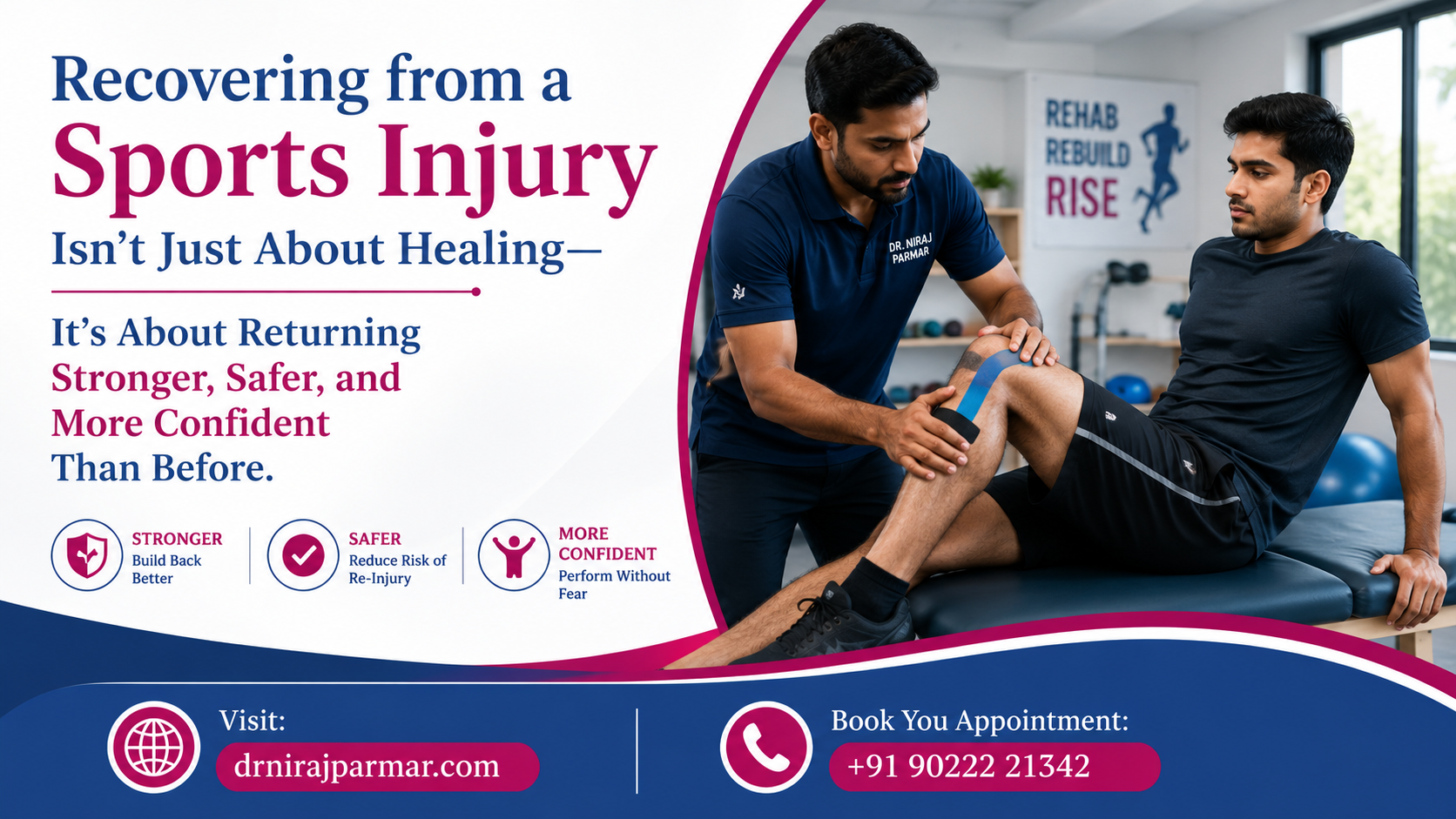
Whether you’re a professional athlete, a weekend runner, or someone who enjoys staying active, a sports injury can feel frustrating and overwhelming. Many people focus only on getting rid of the pain, but true recovery goes much further than that.
As a sports physiotherapist, I always remind my patients that rehabilitation isn’t just about healing the injured tissue—it’s about restoring strength, improving movement, and preventing the injury from happening again. A structured rehabilitation program helps you return to your sport with confidence and reduces the risk of future setbacks.
Phase 1: Managing Pain and Protecting the Injury
The first few days after an injury are all about protecting the affected area and allowing your body to begin its natural healing process.
Modern sports rehabilitation follows the P.E.A.C.E. & L.O.V.E. approach, which encourages protection, education, gradual loading, and maintaining a positive mindset rather than relying solely on prolonged rest.
During this stage, the goal is to control pain, reduce swelling, and avoid activities that may worsen the injury while keeping the rest of the body active whenever possible.
Phase 2: Restoring Movement and Strength
As pain begins to settle, rehabilitation becomes more active.
One of the biggest challenges after an injury is stiffness and muscle weakness. Gentle mobility exercises help restore your range of motion, while carefully planned strengthening exercises reactivate muscles that may have become inactive after the injury.
This phase also focuses on improving balance, coordination, and joint stability, ensuring your body moves efficiently again.
Phase 3: Building Functional Strength
Once the injured tissue has healed sufficiently, the focus shifts from recovery to performance.
Strength training is introduced gradually using the principle of progressive overload. Exercises become more challenging over time to rebuild muscle strength, endurance, and control.
Single-leg and single-arm exercises are particularly important because they identify and correct strength differences between both sides of the body. Addressing these imbalances significantly reduces the risk of future injuries.
Phase 4: Returning to Sport Safely
Returning to sport is much more than being pain-free.
Before resuming full activity, your body must be prepared for the physical demands of competition. This includes agility drills, balance training, sprinting, jumping, change-of-direction exercises, and sport-specific movements.
These advanced rehabilitation exercises restore explosive power, reaction time, and confidence, allowing athletes to return safely and perform at their best.
The Mental Side of Recovery Matters
Physical healing is only one part of rehabilitation. Many athletes develop a fear of re-injury, causing hesitation even after their body has recovered.
Setting small recovery goals, celebrating progress, and gradually rebuilding confidence are essential parts of successful rehabilitation. A positive mindset often plays a significant role in achieving a safe and complete return to sport.
How to Reduce the Risk of Future Injuries
Successful rehabilitation doesn’t end when the pain disappears.
Long-term injury prevention includes:
- Regular strength training
- Mobility and flexibility exercises
- Movement screening
- Proper recovery between training sessions
- Progressive training loads without overtraining
By addressing movement patterns and muscle imbalances, we can help reduce the likelihood of recurring injuries and improve overall athletic performance.
Final Thoughts
Sports injury rehabilitation is not simply about getting back on the field—it’s about returning stronger, more resilient, and better prepared than before. Every stage of recovery has a purpose, from managing pain to rebuilding strength and restoring confidence.
With the right guidance, patience, and evidence-based physiotherapy, an injury doesn’t have to define your athletic journey. It can become an opportunity to build a healthier, stronger body and return to the activities you love with greater confidence than ever before.