
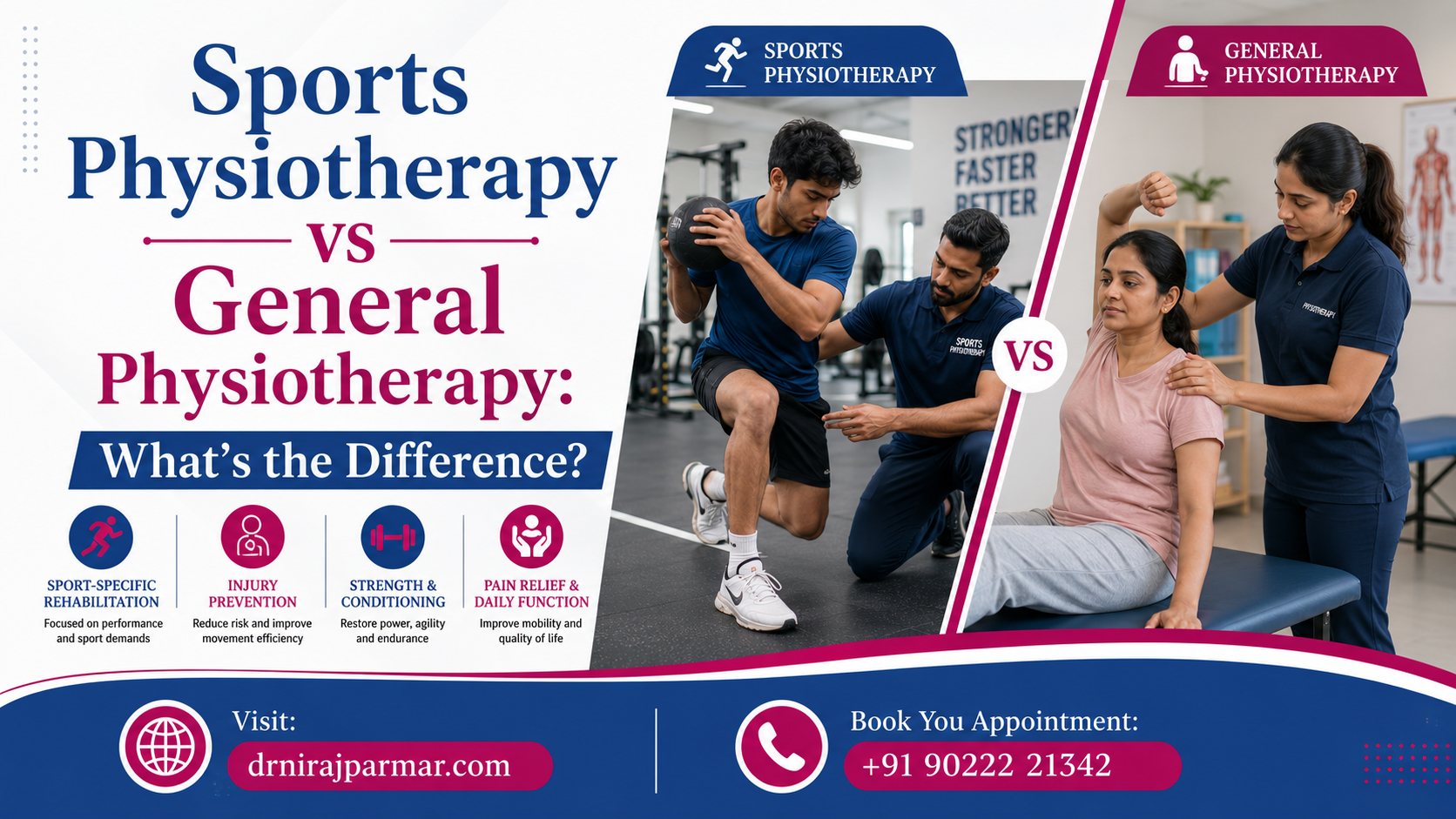
Whether you’re recovering from a sports injury, dealing with persistent back pain, or simply trying to move more comfortably, physiotherapy plays an important role in restoring function and improving quality of life. However, many people are surprised to learn that sports physiotherapy and general physiotherapy are not exactly the same.
Both focus on reducing pain and improving movement, but their approach, goals, and rehabilitation strategies often differ based on a person’s lifestyle and physical demands.
As a sports physiotherapist, I often explain to patients that the goal isn’t just to help someone recover. It’s to help them return to the activities they love with confidence, whether that’s playing competitive sports, running a marathon, lifting weights, or simply keeping up with an active lifestyle.
Understanding General Physiotherapy
General physiotherapy focuses on helping people recover from injuries, surgeries, medical conditions, and everyday musculoskeletal problems.
Patients seeking general physiotherapy may experience:
- Neck or back pain
- Joint stiffness
- Arthritis
- Post-operative rehabilitation
- Balance and mobility issues
- Workplace-related pain
- Age-related movement difficulties
The primary goal is to reduce pain, improve mobility, restore normal function, and help patients return to their daily activities safely and comfortably.
For many individuals, this means being able to walk without pain, climb stairs comfortably, perform household activities, or return to work without discomfort.
What Makes Sports Physiotherapy Different?
Sports physiotherapy builds upon the same clinical foundations but is specifically designed for people whose bodies are exposed to higher physical demands.
These include:
- Professional athletes
- Recreational athletes
- Runners
- Gym enthusiasts
- Football, cricket, badminton, and tennis players
- Fitness enthusiasts
- Anyone with an active lifestyle
The focus extends beyond recovery. Sports physiotherapy aims to optimise movement, improve athletic performance, prevent future injuries, and ensure a safe return to sport.
In many cases, an athlete may no longer feel pain but still lack the strength, balance, coordination, or confidence required to perform safely. This is where sports physiotherapy plays a vital role.
Rehabilitation Goes Beyond Pain Relief
One of the biggest differences between sports physiotherapy and general physiotherapy is the end goal.
General physiotherapy often aims to restore everyday function.
Sports physiotherapy aims to restore performance.
This means rehabilitation progresses beyond basic movement and includes:
- Sport-specific strength training
- Agility drills
- Plyometric exercises
- Balance and proprioception training
- Speed and acceleration work
- Landing and cutting mechanics
- Endurance conditioning
- Return-to-play testing
Every stage is carefully planned to prepare the athlete for the physical demands of their chosen sport.
Looking Beyond the Site of Pain
Another important aspect of sports physiotherapy is movement analysis.
An injury is rarely viewed in isolation.
For example, knee pain may be influenced by poor hip strength, reduced ankle mobility, or altered running mechanics. Shoulder pain may be linked to spinal mobility, posture, or muscle imbalance.
Rather than focusing only on the painful area, sports physiotherapy evaluates how the entire body moves together.
Identifying and correcting these movement patterns not only improves recovery but also reduces the likelihood of recurring injuries.
Injury Prevention Is Part of the Process
Unlike many traditional rehabilitation approaches that begin after an injury occurs, sports physiotherapy also places a strong emphasis on prevention.
Movement screening, strength assessments, flexibility testing, and biomechanical analysis can identify weaknesses before they develop into more significant problems.
This proactive approach helps athletes:
- Improve movement efficiency
- Reduce unnecessary stress on joints
- Correct muscle imbalances
- Manage training loads effectively
- Lower the risk of future injuries
Preventing an injury is always preferable to recovering from one.
Returning to Activity Safely
One of the most common misconceptions is that being pain-free means you’re fully recovered.
In reality, pain is only one part of the recovery journey.
Before returning to sport, the body should be capable of meeting the physical demands of competition or training. This often involves assessing:
- Strength symmetry
- Balance and stability
- Jumping and landing mechanics
- Agility
- Sprinting ability
- Sport-specific movement patterns
- Confidence during movement
These assessments help determine whether an individual is truly ready to return safely while reducing the risk of re-injury.
Which Type of Physiotherapy Is Right for You?
The answer depends on your goals.
If your priority is recovering from everyday pain, improving mobility, or regaining independence after surgery or illness, general physiotherapy may be the right choice.
However, if you regularly participate in sports or physical activity and want to recover fully, improve performance, or prevent future injuries, sports physiotherapy provides a more specialised approach tailored to your body’s unique demands.
Final Thoughts
Both general physiotherapy and sports physiotherapy share the same foundation: helping people move better and live healthier lives. The difference lies in the destination.
General physiotherapy helps you return to daily life with comfort and confidence.
Sports physiotherapy helps you return to your activity stronger, more resilient, and better prepared for the demands ahead.
As a sports physiotherapist, my goal is never just to treat an injury. It’s to understand how your body moves, identify the factors that contributed to the problem, and guide you through an evidence-based rehabilitation program that supports long-term performance and injury prevention.
Because true recovery isn’t simply about getting rid of pain. It’s about helping you move with confidence, perform at your best, and continue doing the activities you enjoy for years to come.